
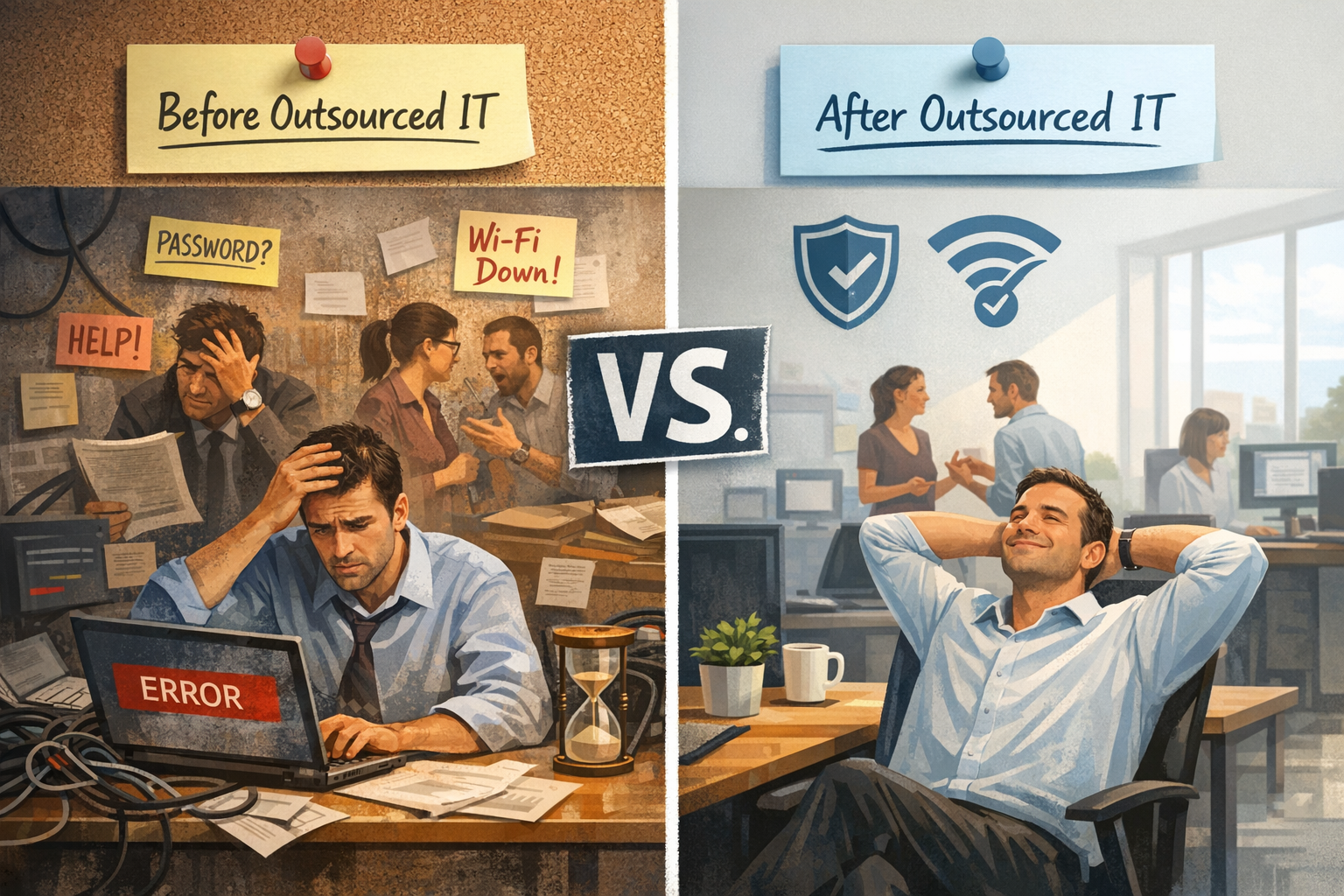
(Even the Non‑Technical Ones)
Most organizations don’t think they have an IT problem.
What they actually have is a steady stream of interruptions, workarounds, small frustrations, and “can you just help with this one thing?” moments that quietly drain time and energy from everyone — especially leadership.
Outsourcing IT isn’t about fixing broken computers.
It’s about removing entire categories of office problems that never should have existed in the first place.
Here’s what actually changes when IT stops living inside your org chart.
There’s No IT Politics
Every office has them — even if no one admits it.
The accidental IT person.
The staff member who “knows computers.”
The fixer whose solutions come with opinions.
Outsourcing IT removes politics from the equation entirely. There’s no status, no internal power struggle, no resentment over access or decisions. Just a neutral third party whose job is to make systems work — not win arguments.
Result: Fewer interpersonal conflicts disguised as technical issues.
Problems Stop Landing on the Wrong Desk
In many small and mid-sized organizations, IT problems bounce around endlessly:
- “Who handles this?”
- “I thought someone else was responsible.”
- “Did anyone submit a ticket?”
With outsourced IT, there is exactly one place issues go — and one team accountable for resolution.
Your staff stops being pulled away from their actual jobs to troubleshoot printers, email, Wi‑Fi, or logins. And leadership stops being the default escalation point for things that shouldn’t require executive attention.
Result: Less frustration, fewer interruptions, better focus across the organization.
Leadership Gets Time Back
When IT is handled internally, leadership often becomes the decision-maker of last resort:
- “Should we approve this?”
- “Is this a real issue?”
- “How risky is this?”
Outsourced IT filters the noise. Leaders stay informed without getting pulled into the weeds. Decisions come with context, not urgency or confusion.
Result: More time spent leading the organization — not managing technology stress.
Security Stops Being Someone’s “Other Job”
Security issues rarely come from bad intentions. They come from unclear ownership.
Passwords.
Suspicious emails.
Unusual logins.
When those responsibilities float between “everyone” and “no one,” risk multiplies quietly.
Outsourced IT centralizes accountability. Security becomes a system, not a suggestion. Employees know what’s expected, leadership knows what’s covered, and risky behaviors stop slipping through unnoticed.
Result: Fewer incidents — and far fewer surprises.
Issues Get Fixed Before People Notice
This is the shift most organizations don’t realize they needed.
Good outsourced IT is proactive. Problems are identified and handled before they become outages, before users complain, and before leadership hears about them at all.
When technology works the way it should, people start saying things like:
“Huh. We haven’t had an issue in a while.”
That’s not luck. That’s oversight.
Result: Fewer emergencies, smoother operations, calmer workdays.
Decisions Stop Being Emotional
Internal IT decisions are often driven by:
- Who’s loudest
- Who’s frustrated
- Who’s most resistant to change
Outsourced IT brings objectivity. Recommendations are based on what fits your organization’s size, goals, and risk tolerance — not office dynamics or habit.
That alone eliminates a surprising amount of tension.
Result: Clearer decisions, less resistance, fewer regrets.
The Office Just… Runs Better
When systems are stable, people feel it — even if they can’t articulate why.
Meetings start on time.
Files are where they should be.
Email works.
That baseline reliability reduces stress across the organization, which reduces conflict, complaints, and burnout.
Result: A calmer office culture with fewer avoidable problems.
The Bottom Line
Outsourcing IT isn’t about giving up control.
It’s about removing distractions that never should’ve been yours in the first place.
When technology stops being a daily headache, your people can focus on the work that actually matters — and leadership can focus on guiding the organization forward instead of troubleshooting behind the scenes.
That’s when things start working the way they should.