
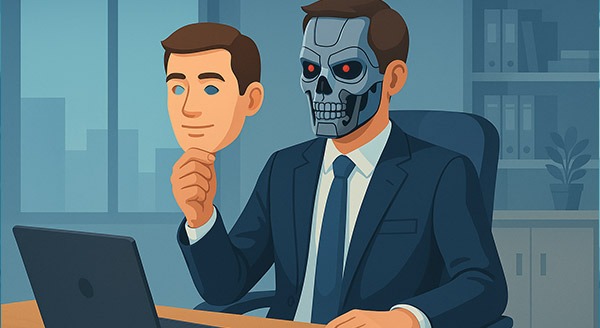
Phishing has evolved from clumsy email scams into a sophisticated cyber threat, thanks to the power of artificial intelligence (AI). Today’s phishing attacks are faster, smarter, and harder to detect—posing a serious risk to individuals, businesses, and governments alike.

🚀 How AI Is Supercharging Phishing Attacks
1. Hyper-Personalization
AI can analyze social media, leaked data, and online behavior to craft messages that feel eerily personal. These emails or messages mimic the tone, style, and context of legitimate communications, making them highly convincing.
2. Deepfake Technology
AI-generated voice and video deepfakes can impersonate executives, colleagues, or loved ones. Imagine receiving a video call from your “CEO” asking for an urgent wire transfer—complete with their voice and facial expressions.
3. Automated Phishing Campaigns
AI can generate and send thousands of phishing emails in seconds, each uniquely tailored to its recipient. Natural language processing (NLP) ensures these messages are grammatically correct and contextually relevant.

4. Chatbot Impersonation
Malicious AI chatbots can engage in real-time conversations, tricking users into revealing sensitive information or clicking malicious links.
5. Bypassing Traditional Filters
AI-generated content often evades spam filters and security software because it doesn’t match known phishing signatures or patterns.
6. Language Localization
AI can fluently translate phishing messages into multiple languages, allowing attackers to target victims globally with native-level fluency.
7. Behavioral Mimicry
AI can analyze internal communication patterns—such as tone, timing, and structure—to mimic how real employees or executives write, making phishing emails appear even more authentic.
8. AI-Driven Social Engineering
AI can simulate human-like interactions on social media or messaging platforms, building trust over time before launching a phishing attempt. This “long-game phishing” is especially dangerous.
🧪 Real-World Examples
- Business Email Compromise (BEC): AI-generated emails have impersonated CFOs and CEOs, leading to multi-million dollar losses.
- Political Spear Phishing: AI tools have been used to target political campaigns with tailored misinformation and phishing attempts.
- Fake Job Offers: AI-generated recruiter messages and job postings lure victims into sharing personal data or downloading malware.
🛡️ What You Can Do About It
1. Educate and Train
Regularly train employees and individuals to recognize phishing attempts. Simulated phishing exercises can help build awareness and resilience.
2. Use AI Against AI
Deploy AI-powered cybersecurity tools that detect anomalies in communication patterns, flag suspicious behavior, and analyze message content in real time.
3. Implement Multi-Factor Authentication (MFA)
Even if credentials are compromised, MFA adds an extra layer of security that can prevent unauthorized access.
4. Verify Requests
Always verify sensitive requests—especially those involving money or data—through a secondary communication channel.
5. Keep Software Updated
Ensure all systems, browsers, and security tools are up to date to protect against known vulnerabilities.
6. Limit Data Exposure
Be mindful of what personal and professional information is shared online. The less data available, the harder it is for AI to craft convincing phishing messages.
7. Adopt Zero Trust Architecture
Implement a zero-trust model where no user or device is trusted by default, even inside the network. This limits the damage if a phishing attack succeeds.
8. Use Email Authentication Protocols
Set up DMARC, DKIM, and SPF to prevent attackers from spoofing your domain in phishing emails.
9. Browser Isolation
Use browser isolation technology to open links in a secure, sandboxed environment, reducing the risk of malware infections from phishing sites.
10. Have an Incident Response Plan
Prepare a clear, rehearsed plan for responding to phishing incidents. This includes isolating affected systems, notifying stakeholders, and conducting forensic analysis.
🔮 Emerging Trends to Watch
- AI-as-a-Service for Cybercrime: Underground markets are offering AI tools tailored for phishing, lowering the barrier for entry.
- Synthetic Identity Fraud: AI is being used to create entirely fake but believable digital identities for long-term scams.
- AI-Enhanced QR Code Phishing (Quishing): Attackers use AI to generate QR codes that lead to malicious sites, often disguised as legitimate business tools.

✅ Final Thoughts
AI is a double-edged sword in cybersecurity. While it empowers attackers with new capabilities, it also equips defenders with powerful tools to fight back. The key is awareness, vigilance, and proactive defense. By staying informed and adopting smart security practices, individuals and organizations can stay one step ahead in this evolving digital battlefield.