

Artificial intelligence is becoming the go‑to assistant in modern workplaces. Tools draft emails, summarize meetings, brainstorm content, troubleshoot problems, and even help us write policies. And while AI can absolutely boost productivity, a growing concern is emerging across industries:
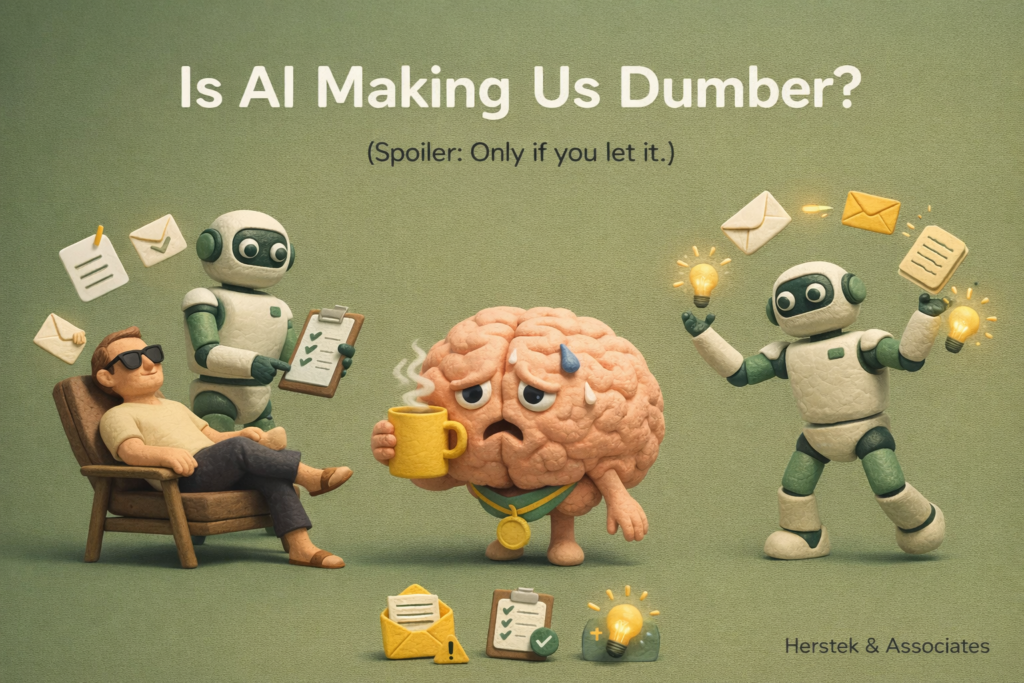
Are we outsourcing too much of our thinking?
This isn’t about fearing AI. It’s about protecting the mental sharpness, judgment, and problem‑solving skills that organizations rely on — the skills that differentiate high‑performing teams from average ones.
At Herstek & Associates, we’ve seen both sides firsthand. When people use AI thoughtfully, the results are impressive. When they rely on it passively, performance dips. The tool isn’t the problem — it’s the engagement behind it.
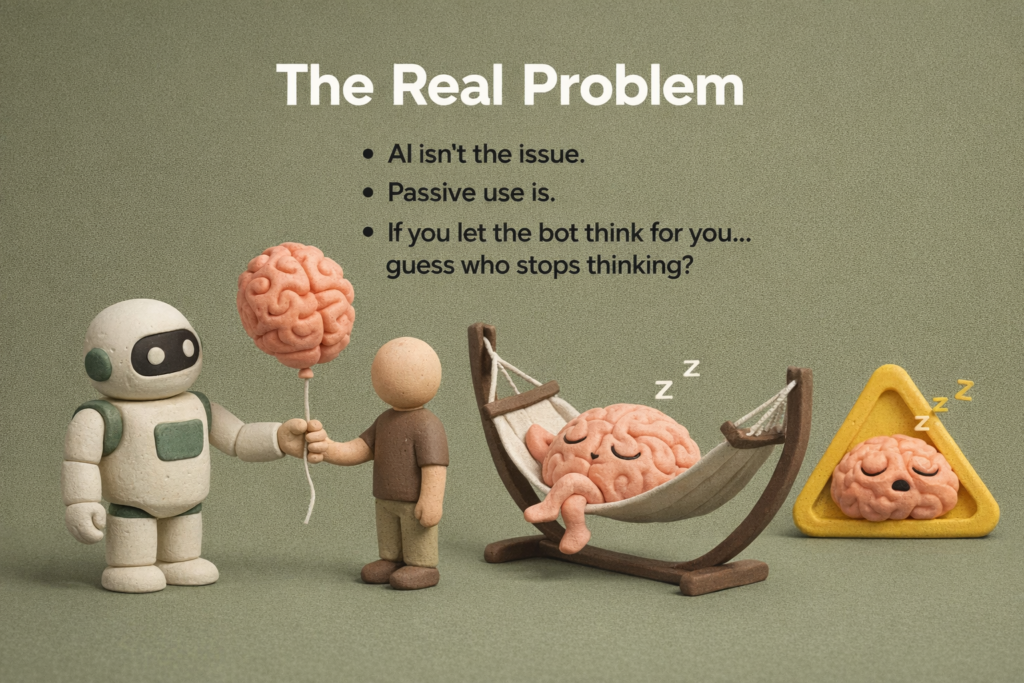
The Real Issue: Cognitive Offloading
One of the biggest risks in the AI‑heavy workplace is a subtle one: letting AI think for us instead of with us.
When employees default to AI for:
- answers
- decisions
- writing
- summarizing
- explaining
…they’re not building the mental muscle required for long‑term skill development. And over time, that affects accuracy, creativity, critical thinking, and even confidence.
But here’s the good news:
We can improve almost anything our brain does — if we practice.
And AI can actually support that practice when used intentionally.
This isn’t about going “backwards” or rejecting new tools. It’s about using AI in a way that amplifies human intelligence instead of replacing it.
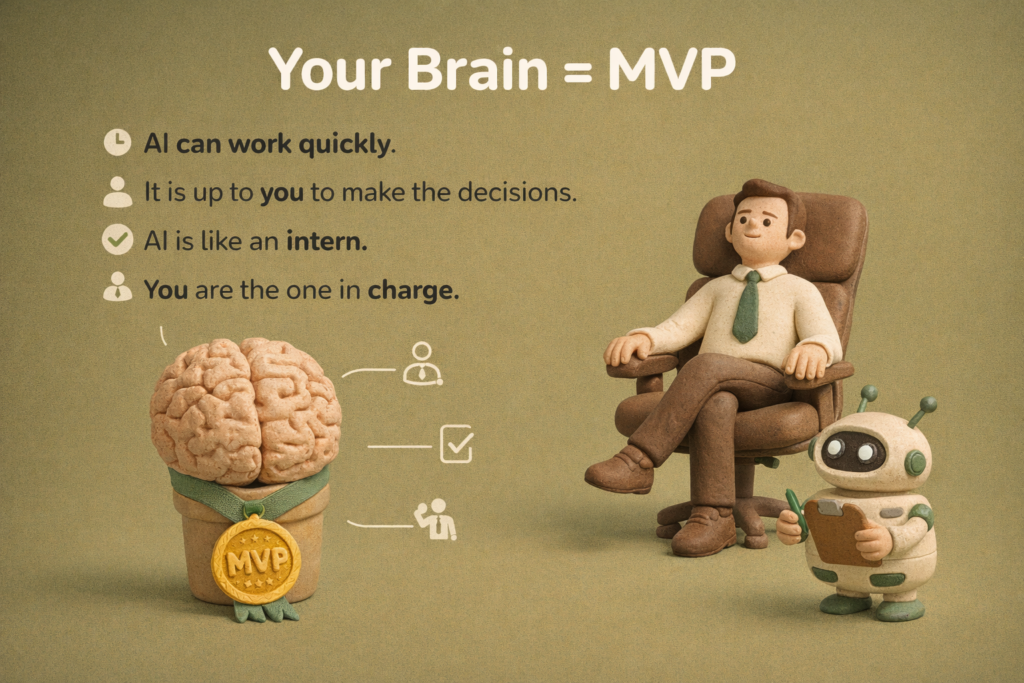
Reclaiming Your Cognitive Edge: Practical Techniques Anyone Can Use
Here are simple, business‑friendly habits that strengthen the brain while still embracing AI.
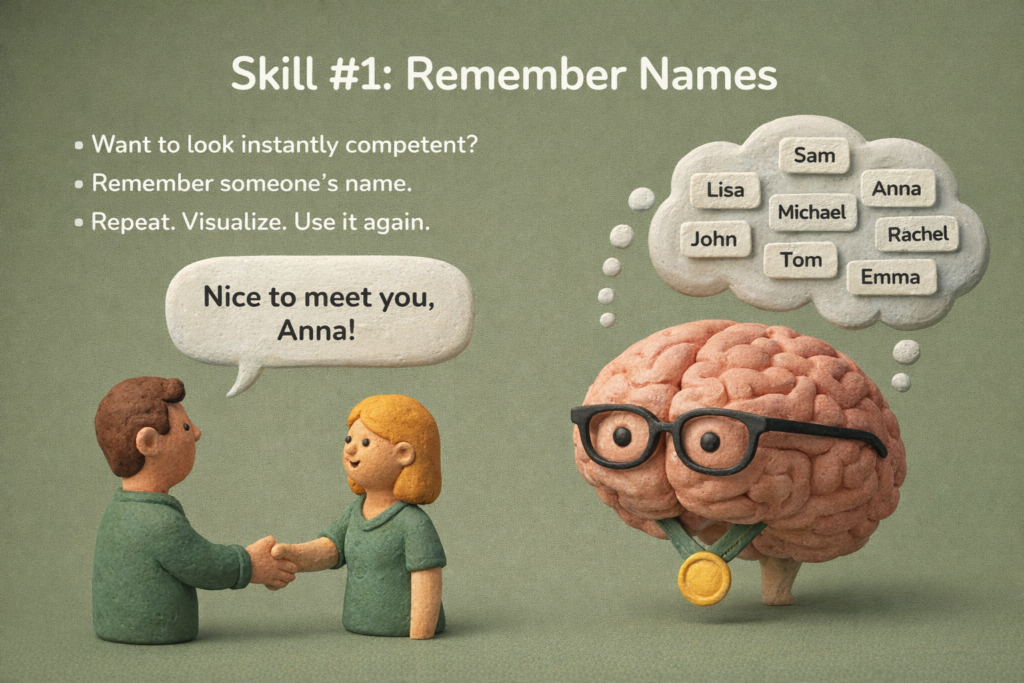
1. Strengthen Memory: The Name‑Recall Technique
Let’s revise the classic “cocktail party” example for the workplace.
Whether you’re on a Zoom call, walking into a client meeting, or joining a project kickoff — remembering names builds trust quickly. And yes, it’s a trainable skill.
Try this:
- When someone introduces themselves, repeat their name immediately.
“Great to meet you, James.” - Anchor it to a visual detail.
James has a blue shirt → imagine the letter “J” stitched on it. - Use the name again before the conversation ends.
Why it works:
Your brain learns through repetition + association. Do this with every new team member or client, and recall becomes second nature.
Where this pays off in business:
People trust the professionals who remember them.
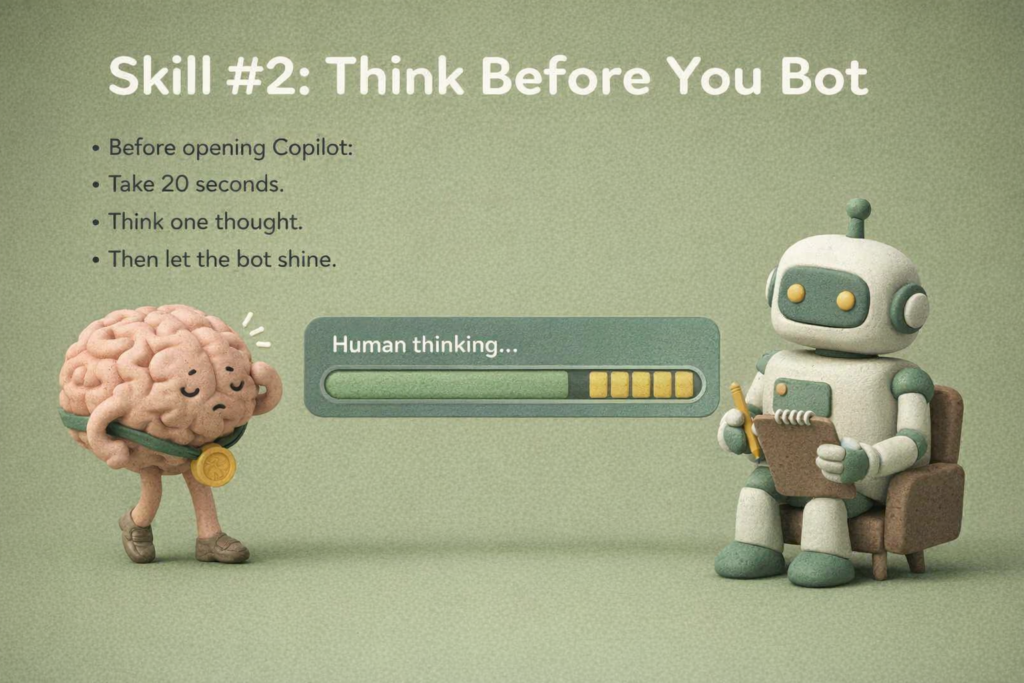
2. Improve Clarity: The “Think First, Then Ask AI” Rule
Before opening Copilot or another assistant:
- Pause for 20–30 seconds.
- Write down what you think the answer might be.
- Then let AI refine, expand, or polish it.
Why it works:
This keeps your critical thinking active and prevents over‑reliance on auto‑generated responses.
Where this pays off:
- Stronger writing
- Better decisions
- More accurate analysis
- Reduced errors from AI hallucinations
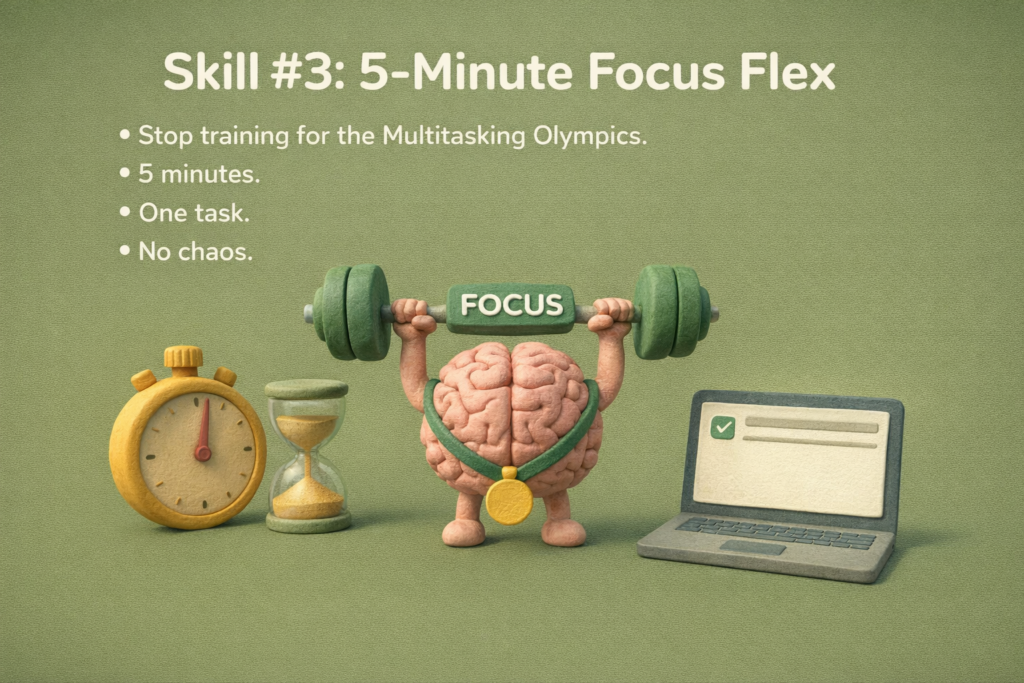
3. Build Focus Strength: 5‑Minute Deep Work Bursts
Multitasking, constant notifications, and app‑switching chip away at cognitive endurance. AI can accelerate this tendency if we’re not careful.
Try this:
- Set a timer for 5 minutes.
- Do one task without distractions.
- Increase the interval slowly over time.
Why it works:
It trains your brain to work deeply in a world full of automation and interruptions.
Where this pays off:
- Higher-quality deliverables
- Better project flow
- Less rework
- More strategic thinking
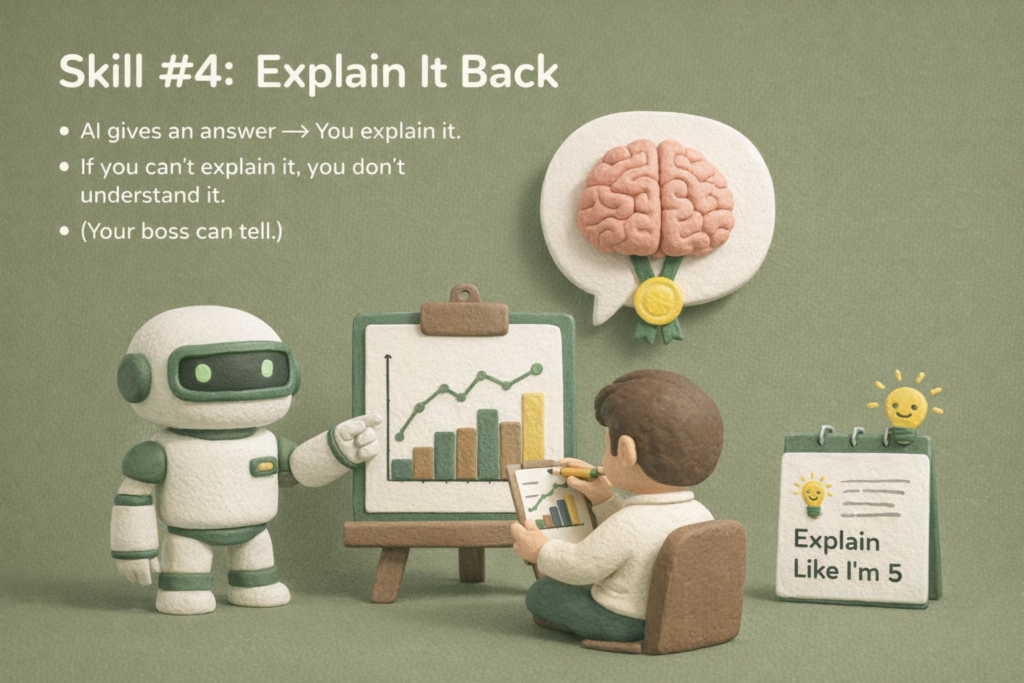
4. Increase Critical Thinking: The “Explain It Back” Method
When AI provides an answer:
- Summarize it in one sentence.
- Identify what’s missing or what you’d challenge.
This isn’t about doubting AI — it’s about engaging with it.
Why it works:
Critical thinking is strengthened when you process information, not just consume it.
Where this pays off:
- Policy writing
- Technical troubleshooting
- Decision-making
- Client communication
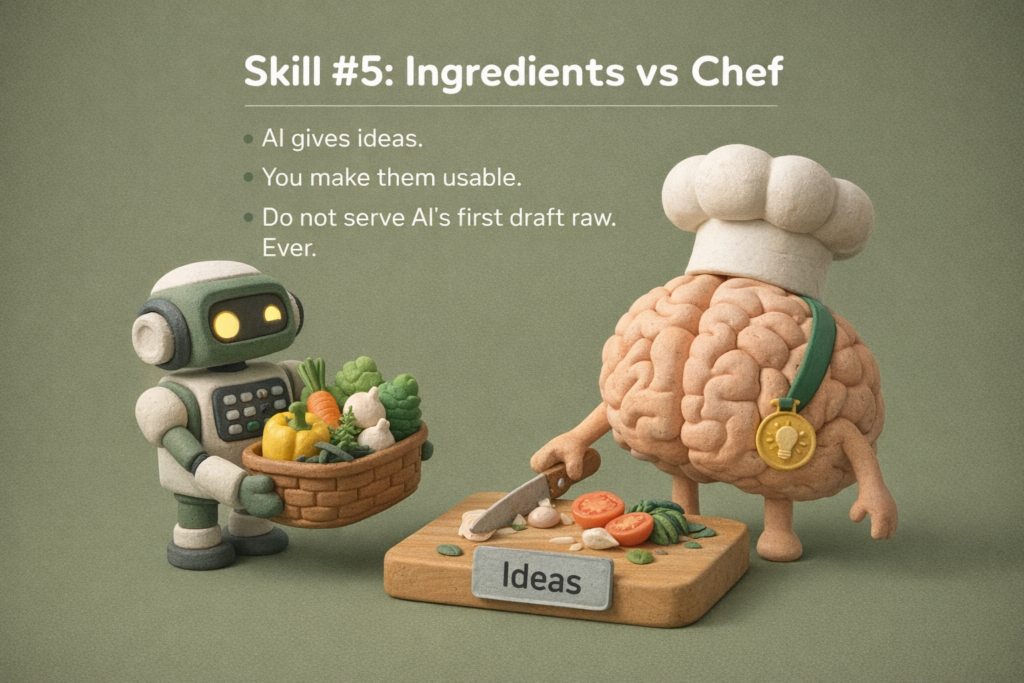
5. Boost Creativity: Treat AI as Raw Material, Not the Final Draft
Instead of asking AI to create finished work:
- Ask it for rough ideas
- Then you shape the final output
Why it works:
Creativity thrives on editing, combining, and refining — not outsourcing.
Where this pays off:
- Marketing
- Problem-solving
- Presentation development
- Innovation workshops
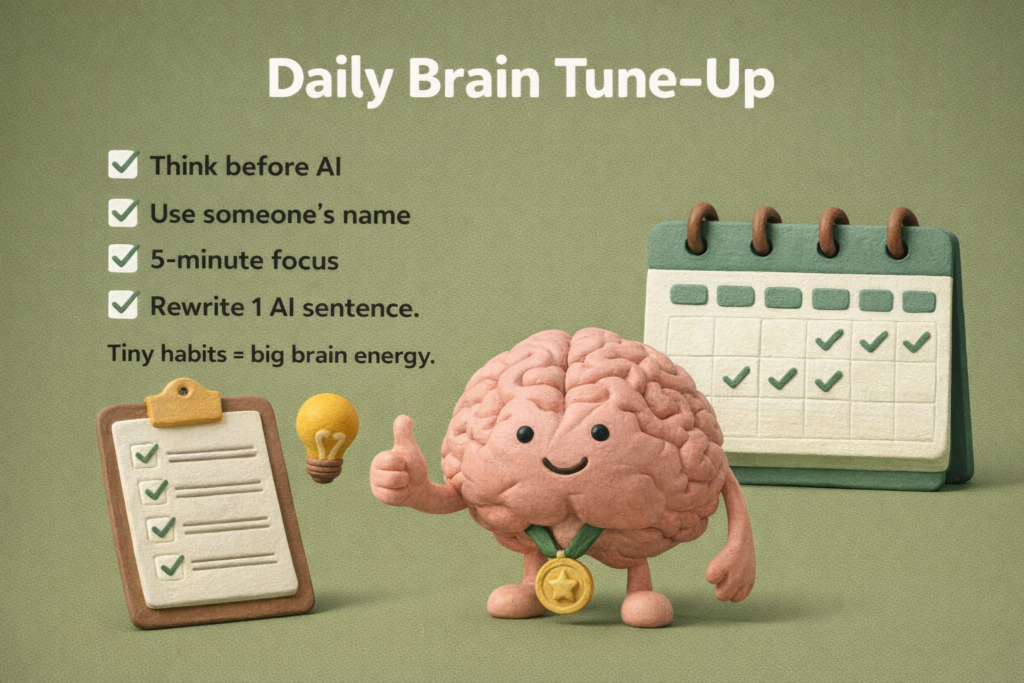
A Simple Daily Brain-Training Loop (Workplace Edition)
These micro‑habits take less than 10 minutes total:
Morning:
Think before AI — jot one idea or answer yourself.
Midday:
Use someone’s name twice (in Teams, email, or meetings).
Afternoon:
Do one 5‑minute deep-focus burst.
End of Day:
Review one AI-generated piece of content and rewrite a single sentence in your own voice.
Small practice. Big improvement.
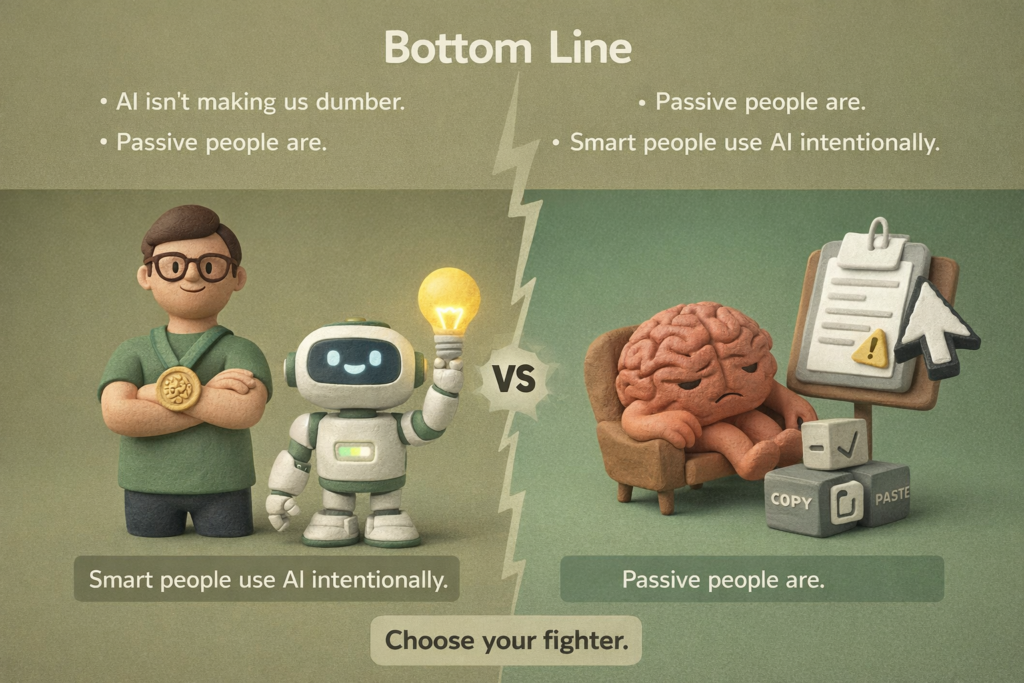
The Final Word
AI isn’t making us dumber.
Passive use is.
When we engage our brains first — and let AI accelerate us second — teams become smarter, faster, more capable, and more confident.
At Herstek & Associates, this is our stance:
Human intelligence drives business.
AI amplifies it.
And the future belongs to the teams that train both.