
A Northeast PA SMB & Non‑Profit Reality Check**
If your team in Northeast Pennsylvania is getting frustrated with slow systems, glitchy apps, or “work‑arounds” that somehow became normal… you’re already paying for outdated IT—whether you realize it or not.
2026 research shows SMBs are facing rising complexity, increased attacker automation, and growing security expectations—all while still trying to operate with legacy systems built for a different era.
And here’s the kicker:
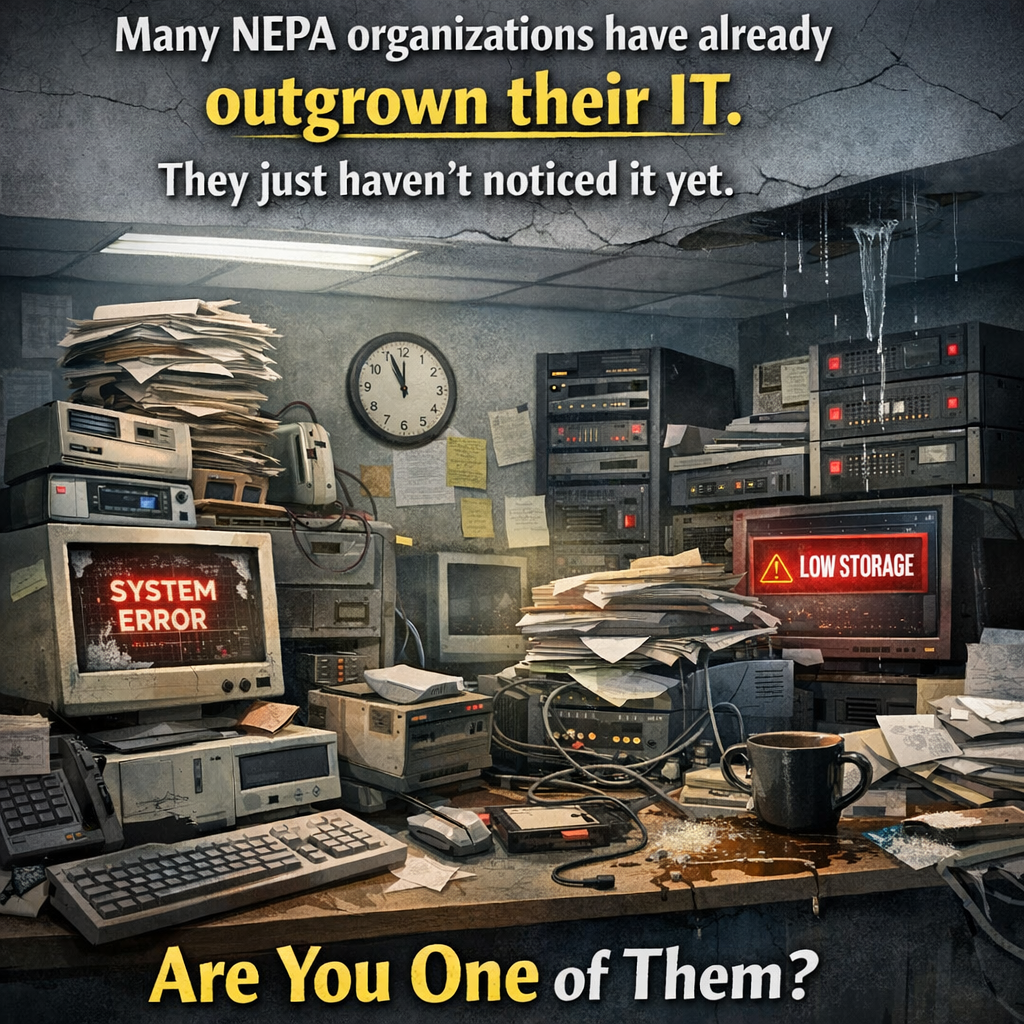
Many NEPA organizations have already outgrown their IT. They just haven’t noticed it yet.
1. “Good Enough” Technology That’s Quietly Holding You Back
In NEPA, especially in older buildings from Wilkes‑Barre to Scranton, it’s common to see:
- A server sitting in a back closet that hasn’t been replaced in a decade
- Old wiring that bottlenecks internet speeds
- PCs that take five minutes to boot
- Line‑of‑business software running on outdated versions because “we don’t want to break anything”
This creates hidden costs:
- Staff lose hours each week waiting on slow systems
- Old hardware increases downtime
- Repairs get more expensive
- Teams operate below their true productivity
Research shows that underfunded or reactive IT environments lead directly to operational inefficiency, more downtime, and lack of scalability.
Mini‑Example (Relatable):
A small nonprofit in Kingston told us they “didn’t have IT issues”… until a power flicker killed their aging server during a donor campaign. The systems eventually recovered—but the damage to momentum and trust was done.
2. Shadow IT: The Tools Your Team Uses That You Don’t Know About
NEPA teams are resourceful. When employees need something, they find a way:
- A staffer signs up for a free file‑sharing app
- A department stores client data in a personal cloud
- Someone uses an unapproved note‑taking tool to track sensitive information
This creates holes in your security—because you can’t secure what you don’t know exists.
2026 cybersecurity guidance stresses that organizations must maintain clear visibility into their hardware, software, and cloud services to avoid undocumented risk.
Mini‑Example (Relatable):
A small business in Dallas, PA discovered their team was using four different file‑sharing tools because “the shared drive was too slow.” It wasn’t a tech problem—it was a visibility problem.
3. Identity‑Based Attacks: Your Biggest Blind Spot
Identity attacks are now the #1 threat to SMBs.
Modern attackers don’t “hack in”—they simply log in with stolen credentials.
And with AI‑generated phishing emails achieving click‑through rates of over 50%, even tech‑savvy employees can be fooled.
Most NEPA organizations still rely on:
- Passwords alone
- Old email filtering
- Basic antivirus
- “We trust our people not to click things”
…which leaves massive gaps.
Mini‑Example (Relatable):
A nonprofit in Pittston had a volunteer fall for a fake invoice email. The attacker didn’t get far—but they could have. The organization didn’t have MFA, modern protections, or training in place at the time.
4. Believing You’re “Too Small” to Be a Target
This misconception is huge across NEPA, especially among smaller nonprofits and family‑owned businesses.
But 2026 cybersecurity reports show SMBs are actually becoming the primary target for attackers, thanks to automated AI-powered tools that let attackers scan and attack hundreds of small networks at once.
You’re not being targeted personally.
You’re being targeted automatically.
5. Too Many Tools, Not Enough Governance
It’s common to see NEPA organizations with:
- A firewall from 2016
- Monitoring tools no one checks
- Antivirus that expired months ago
- Backups that “should be running”
The issue isn’t always the tools—it’s the lack of management.
2026 findings highlight that many SMBs own good security products but lack the governance, configuration, and oversight to use them effectively.
6. Outdated Disaster Recovery Plans That Wouldn’t Survive Today
Ransomware now moves fast—encrypting and exfiltrating data in minutes.
Yet many NEPA organizations still rely on:
- Local-only backups
- USB drives
- Old servers
- A dusty DR plan from 2018
Modern guidance emphasizes immutable backups, tested recovery, and stronger endpoint protection.
7. Hybrid Work Has Quietly Expanded Your Attack Surface
Even in NEPA’s more traditional workplaces, hybrid work is here to stay—and it introduces risks:
- Personal devices
- Home Wi‑Fi networks
- Unsecured collaboration tools
- Remote access that isn’t monitored
2026 trends show hybrid work continues to expose identity gaps and cloud misconfigurations.
So… Have You Outgrown Your IT?
If any of these sound familiar, the answer is yes:
- “Everything works… most of the time.”
- “We’ve never had a breach.”
- “We’ll deal with IT when something breaks.”
- “We don’t handle super sensitive data; we’re fine.”
In 2026, that mindset is no longer safe—or sustainable.
⭐ Partner With Herstek & Associates — Your NEPA Technology Advocates
If you suspect your organization has quietly outgrown its IT, Herstek & Associates is here to help.
We specialize in working with Northeast Pennsylvania SMBs and nonprofits to:
- Identify hidden risks you may not see
- Modernize aging systems without unnecessary spending
- Strengthen security against modern identity‑based threats
- Build an IT roadmap that keeps you ahead instead of catching up
- Support hybrid work without adding risk
Let’s make your technology an asset again—not a liability.