
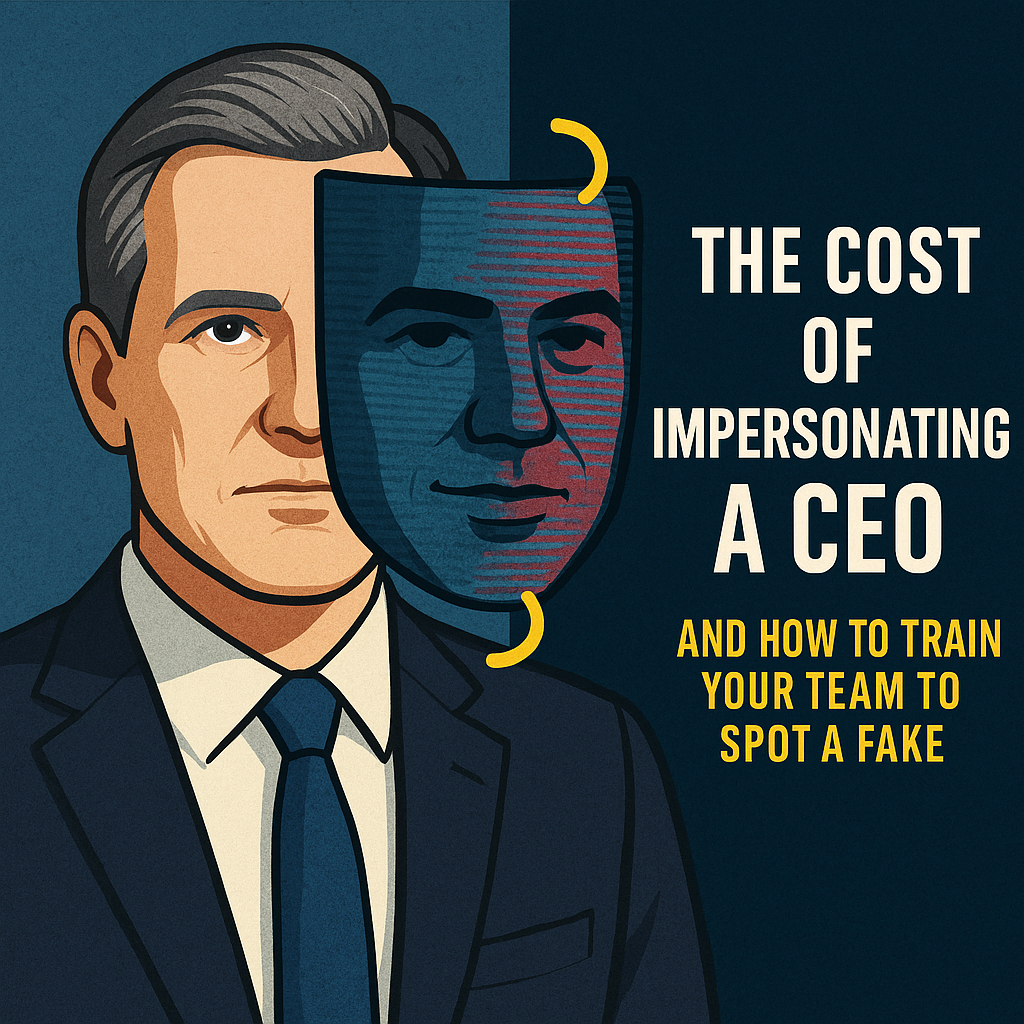
In an era where artificial intelligence can mimic voices, faces, and even personalities, impersonating a CEO is no longer a high-tech fantasy—it’s a real and rising threat. From deepfake video calls to cloned voice messages, cybercriminals are using AI to exploit trust at the highest levels of business.
But how much does it actually cost to impersonate a CEO? And more importantly, how can you train your team to spot a fake before it’s too late?
💰 How Much Does It Cost to Impersonate a CEO?
The answer might surprise you: as little as $20.
With today’s AI tools, hackers can create convincing deepfakes using just a few seconds of publicly available audio or video. Whether they’re using commercial platforms or black-market services, the barrier to entry is shockingly low.
📊 Cost Breakdown
| Method | Cost Estimate | Notes |
|---|---|---|
| Dark Web Services | $300–$20,000/min | High-end, custom, illegal |
| DIY with AI Tools | $20–$200/video | Legal tools misused |
| Voice Cloning Only | Free–$99/month | Needs short audio sample |
| Video + Voice Deepfake | $100–$500 total | For convincing impersonation |
| Real-World Losses | $243K–$25M+ | From successful scams |
Real-world examples include:
- A UK energy firm scammed out of $243,000 via a deepfake voice call.
- A Hong Kong company that lost $25 million after a fake CFO appeared on a Zoom call.
- An attempted impersonation of Ferrari’s CEO using WhatsApp and AI-generated voice messages.
🧠 Why It Works
CEO impersonation scams succeed because they exploit:
- Authority bias: “It’s the CEO—I have to act.”
- Urgency: “This needs to happen now.”
- Trust in technology: “It looked and sounded real.”
With so much executive content online—interviews, speeches, social media—AI models have plenty of material to work with.
🛡️ How to Train Your Team to Spot a Fake CEO
1. Deepfake Awareness Training
- Show real vs. fake examples of CEO videos and voice messages.
- Teach employees to spot red flags like unnatural blinking, robotic tone, or mismatched lip-syncing.
2. Simulated Phishing & Deepfake Drills
- Run internal tests using spoofed emails or AI-generated voice messages.
- Measure response times and reinforce best practices.
3. “Verify to Confirm” Protocols
- Require secondary verification for high-risk requests (e.g., call back on a known number).
- Use code words or internal verification steps for executive communications.
4. Train for Emotional Triggers
- Help employees recognize manipulation tactics like urgency, secrecy, or flattery.
- Encourage a “pause and verify” mindset over blind compliance.
5. Use AI Detection Tools
- Deploy tools that analyze voice biometrics, facial expressions, and metadata.
- Integrate with email security platforms to flag spoofed domains.
6. Create a Culture of Vigilance
- Make impersonation threats part of onboarding and ongoing training.
- Reward employees who report suspicious activity.
- Share real-world case studies to keep awareness high.
✅ Training Summary
| Training Element | Why It Matters |
|---|---|
| Deepfake video/audio simulations | Builds real-world recognition skills |
| Phishing + social engineering drills | Tests emotional response under pressure |
| Verification protocols | Prevents blind trust in executive requests |
| AI detection tools | Adds a technical layer of defense |
| Culture of skepticism | Empowers employees to question, not just comply |
Final Thought
Cybersecurity is no longer just about firewalls and passwords—it’s about verifying identity in a world where seeing and hearing is no longer believing.
If your team isn’t trained to spot a fake CEO, your business could be one deepfake away from disaster.